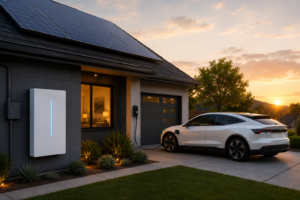
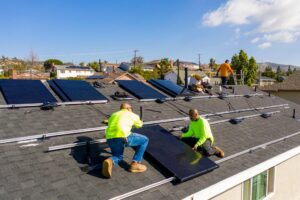
Is solar ownership really dead in 2026? Short answer: no—but the game just changed, and third-party owned (TPO) systems now have a big leg up.
With the One Big Beautiful Bill (“BBB”) signed in 2025, the 30% federal residential solar tax credit (25D) for homeowners ends after December 31, 2025, while tax credits for third-party owned systems (48E) like leases and PPAs continue for a few more years. (Solar.com)
That shift is exactly why leasing companies are pushing hard on TPO with 5-year “fair market value” buyout options—they’re trying to create a “best of both worlds” path where you start as a renter and later become an owner.
In this article, we’ll break down what that actually means for you.
What Changed in 2026: Why Everyone’s Talking About TPO
Under the BBB/OBBBA changes:
- The 30% Residential Clean Energy Credit (25D) for homeowners is gone after 2025. If you install in 2026 as a direct owner, there’s no longer a federal tax credit you personally claim. (Solar.com)
- TPO systems (leases & PPAs) can still access a 30% credit under section 48E through 2027, but the leasing company claims it—not you—and bakes those savings into your monthly payment or buyout terms.
So in 2026 and beyond, the federal government is quietly nudging homeowners toward TPO, because that’s where the remaining incentives live.
What Is TPO Solar, Exactly?
Third-party owned (TPO) solar means you don’t own the equipment at first:
- With a solar lease, you pay a fixed (or slightly escalating) monthly payment to use the system.
- With a PPA (power purchase agreement), you pay per kWh for the energy the system produces, usually at a discount to your utility rate.
- The leasing company owns the system, claims the tax credits, handles major maintenance, and often guarantees performance.
In 2026, when homeowners no longer get the 30% credit themselves, this model suddenly becomes very attractive—especially when paired with a 5-year fair-market-value buyout option.
Pros & Cons of Solar Ownership in a Post-Credit World
Even without a homeowner tax credit, ownership still isn’t dead—it just looks different.
Pros of owning solar in 2026
- You control the asset. Once it’s paid off, you’re only paying small utility fees plus any maintenance.
- Better impact on home value. Owned systems generally add more value than leased systems because the equipment conveys as part of the property and the buyer doesn’t inherit a lease payment.
- No third-party rules. No transfer paperwork, no buyout terms, no escalators.
- Great for cash buyers & strong HELOC buyers. If you can pay cash or use a low-rate HELOC, you’re still effectively pre-buying decades of electricity.
Cons of owning solar after BBB
- No 30% federal credit for homeowners after 2025. That’s a big hit to ROI for many families.
- Loans look less attractive. Without the tax credit, many traditional dealer-fee solar loans will feel expensive—monthly payments could be closer to or higher than your current power bill.
- More responsibility. You’re on the hook for long-term performance, monitoring, and any out-of-warranty repairs (though panel and inverter warranties still help a lot).
Bottom line: ownership still wins for long-term, high-equity homeowners with good cash or HELOC options—but it’s not the no-brainer it was when you could claim 30% back from the IRS.
Pros & Cons of TPO (Leases and PPAs) in 2026
Why TPO is suddenly the star
- The leasing company still gets a 30%+ federal credit under 48E (through 2027) and can pass some of that value to you via lower payments. (Solar.com)
- $0 out of pocket is real. Just like before, TPO can offer true no-money-down with no requirement that you personally have tax liability.
- No personal solar “debt.” A lease payment usually doesn’t show up the same way a big solar loan does on your credit profile, which can matter when applying for a mortgage or car loan.
- Maintenance is included. Most TPO deals include monitoring, repairs, and sometimes production guarantees for 20–25 years—huge peace of mind.
- Great for retirees or lower-income households. If you don’t owe much federal tax, you weren’t fully benefiting from the tax credit anyway. Letting a leasing company capture it and discount your payment can make more sense.
The downsides of TPO
- You don’t own the system—at least at first. You’re essentially renting energy equipment.
- Escalators. Many leases and PPAs include 1–3% annual price escalators. In a low-inflation utility environment, that can eat into your savings over time.
- Transfer headaches. Selling the home with a lease means the buyer has to assume the contract or you have to buy it out.
- Fine print matters. Early termination, roof work, and “what happens after the term is up” all live in the long legalese section most people skip.
The 5-Year Buyout: “Best of Both Worlds” or Just Clever Marketing?
To respond to all this, many leasing companies now highlight a 5-year “fair market value” buyout option.
The pitch goes something like:
- Years 0–5:
- You lease the system with $0 down, lower payments than your old utility bill, and no personal tax credit needed.
- The leasing company claims the 48E credit and accelerated depreciation and uses that to subsidize your payment. (Solar.com)
- Year 5:
- You can purchase the system at “fair market value” (FMV).
- Because the system is a few years old and has already generated tax benefits for the lessor, the FMV is often substantially less than the original installed cost.
- After buyout:
- You now own the system outright (or finance the buyout amount with a smaller loan or HELOC).
- The lease is gone, and you enjoy owned-solar economics for the remaining 20+ years of useful life.
Why this can truly be a “best of both worlds”
- You avoid the risk of buying in 2026 without a homeowner tax credit.
- You lock in savings early, using the leasing company’s tax appetite and incentives.
- In 5 years, if your situation is strong (equity, income, HELOC availability), you can flip into ownership at a much lower effective price.
The catches you need to watch for
- FMV is not pre-set. It’s usually based on an appraisal formula—not a guaranteed number—so you need to understand how it’s calculated.
- If your income or credit situation is weaker in 5 years, you may not qualify to finance the buyout on good terms.
- If you’re planning to move in 3–6 years, you’ll want to know whether:
- You can exercise the buyout and roll it into the home sale, or
- The buyer can assume the lease easily at the same or better terms.
This structure really can be powerful—but only if you go in with eyes wide open.
So… Is Solar Ownership Really Dead in 2026?
Absolutely not.
What’s happening instead is:
- Solar ownership is becoming more niche and strategic—best for:
- Cash buyers and HELOC users in 2026+ who still love the idea of owning a long-term asset.
- TPO is becoming the default path for many middle-income households, especially after BBB tilted remaining federal incentives toward corporate owners rather than individual homeowners. (Smith and Howard)
- Hybrid strategies like 5-year FMV buyouts blur the line—letting you act like a TPO customer now and convert to ownership later when the numbers and your life situation line up.
The real question isn’t “Is ownership dead?” It’s:
Which path gives you the lowest, most predictable lifetime cost of energy with the least stress?
That answer will look different for a 70-year-old retiree than for a 35-year-old with a growing family and a strong cash reserve.
How Eagle Mountain Solar Can Help You Weigh Ownership vs TPO
At Eagle Mountain Solar, we’re not married to one model. We broker:
- Traditional ownership options (cash, HELOC, and solar loans)
- TPO options (leases and PPAs)
- And increasingly, TPO plans with clearly explained 5-year buyouts
Our job is to:
- Model your lifetime cost of energy under each scenario
- Factor in BBB-era policy changes, local utility rules, and your tax situation
- Show you where ownership still shines and where TPO or a hybrid path might win for your specific home
Thinking about solar in 2026 and not sure whether to own, lease, or plan for a 5-year buyout?
Visit EagleMountainSolar.com or reach out for a free, no-pressure consultation. We’ll walk you through the numbers, explain the fine print, and help you decide if ownership, TPO, or a best-of-both-worlds strategy makes the most sense for you and your home.
|| ||