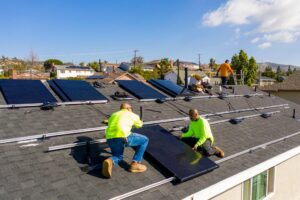
Installing residential solar in Texas is more popular than ever in 2025, but if you live in a community with a Homeowners Association (HOA), you might be concerned about HOA rules. Can your HOA prevent you from putting panels on your roof? The good news: Texas law strongly protects homeowners’ rights to go solar, even in HOA neighborhoods. In this guide, we’ll explain Texas HOA regulations for solar panels, what HOAs can and cannot do, and how to work with your HOA so you can enjoy the benefits of solar energy at home.
Why Texas Homeowners Worry About HOAs and Solar
Many Texas homeowners live in HOA-governed communities that enforce neighborhood aesthetics and rules. It’s common to wonder if installing solar panels will clash with HOA guidelines. Some HOAs in the past tried to ban solar panels for aesthetic reasons, leaving homeowners unsure if they’re allowed to go solar. With solar adoption booming in 2025, clarity is key. Fortunately, Texas has “solar rights” laws that limit HOAs from overreaching. By understanding these laws, you can confidently plan a solar installation that meets HOA requirements and state regulations. Let’s break down what those rules mean for you as a homeowner.
Texas Solar Access Law: Your Right to Go Solar
Texas passed House Bill 362 (now Texas Property Code 202.010) to ensure HOAs cannot outright forbid solar panel installations on your property. In plain terms, HOAs cannot deny a homeowner from installing solar panels on their own roof or property simply because they don’t like how it looks (Solar Rights & Regulations | www.gosolartexas.org). This law, often called Texas’s “Solar Access Law,” gives you a legal right to harness solar energy at home.
However, you still must follow normal HOA approval procedures – meaning you should submit your plans to your HOA’s architectural review committee if required, just as you would for any exterior home improvement. The HOA can enforce certain reasonable guidelines (which we’ll detail next), but they cannot impose a blanket ban on solar panels in the neighborhood. In short, Texas protects your ability to go solar.
When an HOA Can Restrict a Solar Installation (Exceptions)
While HOAs can’t say “no solar at all,” the law does outline specific exceptions where an HOA may restrict or dictate your solar installation (Solar Rights & Regulations | www.gosolartexas.org) These exceptions are mostly about safety, common property, and preserving neighborhood character. In Texas, your HOA’s rules can legally require changes or even deny a specific solar placement only if:
- Safety or Legality: The solar setup would violate public health, safety codes, or any law (for example, creating a fire hazard).
- Common Area Installations: Panels are proposed on common property (land or facilities owned by the HOA, not on your private roof). HOAs can forbid solar on shared community structures.
- Extending Above Roofline: Panels that extend higher than your roof’s peak or aren’t parallel to the roof slope can be rejected. (In practice, most standard flush-mount roof panels comply with this.)
- Ground Mount Height: A ground-mounted array taller than your fence line can be disallowed. This prevents tall, unsightly mounts in yards.
- Warranty Violations: The installation method would violate your roof warranty. (A properly installed system won’t do this – reputable installers ensure your roof warranty remains intact.)
- Non-Neutral Colors: Any visible parts (frames, conduits, etc.) aren’t in a silver, bronze, or black tone. Essentially, flashy colors or reflective metal that stand out can be prohibited. Nearly all modern panels are black or dark blue, so this is rarely an issue.
- No Prior Approval: You failed to seek HOA approval before installation. This is important – always follow your HOA’s application process. Even though they can’t deny solar arbitrarily, they are allowed to require that you submit plans for approval first.
(Solar Rights & Regulations | www.gosolartexas.org)
Aside from these exceptions, HOAs cannot refuse your solar project. So if your HOA board raises a concern outside of these areas (for example, “we don’t like how it looks on the front roof”), remember that cosmetic preference alone is not grounds to reject your solar panels under Texas law. In the next section, we’ll discuss how to navigate the approval process and address common aesthetic concerns.
Getting HOA Approval for Your Solar Panel System
Step 1: Review Your HOA Guidelines. Start by checking your HOA’s covenants or design guidelines for any mention of solar panels. Many HOAs have a section that acknowledges Texas law and outlines the approval steps. Expect to fill out an Architectural Change Request form or similar, including details like panel layout, panel color (typically black), and equipment location. Don’t be intimidated – this is routine, and your solar installer can usually help provide the specs and drawings you need.
Step 2: Work With a Quality Installer. Choose a reputable Texas solar installer (like Eagle Mountain Solar) who has experience installing in HOA communities. They’ll ensure the design is compliant with HOA rules and state law – for example, using all-black panels and low-profile mounting that looks neat on the roof. An experienced installer can also supply documentation to the HOA about the system’s appearance and safety compliance, smoothing the approval.
Step 3: Address Placement and Aesthetics. The most common HOA feedback on a solar request is about panel placement – usually preferring panels on the backside of the roof for aesthetics. Remember, your HOA can suggest where to place panels on the roof, but you have rights here too. Texas law says if the homeowner can demonstrate an alternate panel location (like the originally proposed spot) would increase energy production by 10% or more compared to the HOA’s suggested location, the HOA must allow the more efficient placement (Solar Rights & Regulations | www.gosolartexas.org). In other words, if putting panels on the back roof cuts your energy output significantly, you can petition to keep your optimal layout (using a tool like NREL’s PVWatts to show the production difference). Most HOA boards will be reasonable if you explain that a certain orientation is needed for the system to work best.
Step 4: Get Written Approval Before Installation. Always wait for official HOA approval (a letter or email) before moving forward with the install. Texas HOAs can’t unreasonably withhold approval, but you should have the green light in writing to satisfy everyone. Once approved, abide by any minor stipulations in the approval (for instance, some HOAs ask that conduit (wiring) be painted to match the roof or trim – a simple request your installer will handle).
Step 5: Complete the Installation Professionally. After approval, your solar contractor will pull any necessary city permits and schedule the installation. When the panels go up, the HOA will see that you followed the plan: a tidy, code-compliant solar array that actually enhances the home without violating any rules. If any HOA board members were skeptical, they’ll likely be reassured once they see the final result.
Special Cases and 2025 Updates for Texas HOAs
Texas has very homeowner-friendly solar laws, and as of 2025 those laws remain robust. A couple of special situations to note:
- New Developments: If you live in a brand new subdivision that’s still under development, temporary stricter rules might apply. Texas law previously allowed developers of new communities to forbid solar until the neighborhood was complete. Today this exception is very limited – a developer can only restrict solar during the development phase if the subdivision has 50 or fewer homes (Solar Rights & Regulations | www.gosolartexas.org). In larger developments, they cannot impose a blanket ban. If your community is still building out, check if any developer-era covenants affect solar. These restrictions typically lift once the development period ends or the specified number of units are built.
- Solar Shingles and New Technology: What about solar shingles or roof-integrated solar tiles? These newer products are designed to blend in with your roof. Texas’s definition of a “solar energy device” is broad, so solar shingles are generally protected just like traditional panels. In fact, proposed legislation (HB 431 in the 2025 session) is looking to explicitly ensure HOAs treat solar roof tiles the same as panels, preventing any confusion. If you’re considering an integrated solar roof, you should still follow the same approval process, but know that HOAs can’t prohibit them if they meet the law’s requirements (they are flush with the roof and in a neutral color, etc.).
- Property Tax Exemption (FYI): This isn’t an HOA rule, but Texas gives a 100% property tax exemption on the added home value from solar panels. So if your HOA board or neighbors express concern about home values or taxes, you can confidently note that state law prevents your solar investment from increasing your property tax – it’s financially beneficial with no downside to the community.
Overall, no major changes to HOA-related solar laws have come in 2025 – the protections established in the 2010s are still in full effect, empowering homeowners to go solar. Staying informed on any new state bills is wise (for instance, if any new HOA-solar legislation passes in late 2025, it will only further support solar-friendly policies). Eagle Mountain Solar keeps an eye on these developments to advise our clients accordingly.
Making Solar in an HOA Easy – We’re Here to Help
Going solar in an HOA community might sound daunting, but with the right partner and knowledge, it’s a smooth process. At Eagle Mountain Solar, we have extensive experience helping Texas homeowners go solar while satisfying HOA requirements. We can:
- Review your HOA guidelines and help prepare the necessary documentation for approval.
- Design your solar system to maximize curb appeal and performance – using sleek panel designs that HOAs love and positioning that meets both your energy needs and the community’s standards.
- Communicate with your HOA if needed to address any concerns, armed with facts about Texas law and the specific benefits of your system.
- Handle all installation steps professionally and efficiently once approved, including permits, inspections, and utility interconnection.
By entrusting our team, you can be confident that your solar project will not only save you money on electric bills but also stay in good graces with your HOA. We believe in making the switch to solar hassle-free – even “HOA hassle-free”!
Ready to power your home with sunshine (and stay on good terms with your HOA)? If you’re a Texas homeowner considering solar, contact Eagle Mountain Solar today for a free consultation. Our experts will walk you through the process, handle the details, and ensure your project meets all guidelines. Don’t let HOA myths hold you back – Texas has cleared the way for you to enjoy clean, cost-saving solar energy at home. Let’s make your solar dreams a reality, together! (Solar Rights & Regulations | www.gosolartexas.org)
||| ||| energy|renewable-energy|solar|solar-power|sustainability