DIY Solar Panels vs. Professional Installation: Pros, Cons, and What Homeowners Should Know in 2025
Thinking about adding solar panels to your home in 2025? You’re not alone. With solar costs dropping and electricity rates rising, more homeowners are exploring solar energy. One big question that often comes up is whether to install solar panels yourself (DIY) or hire a professional solar installer. At first glance, taking the DIY route can seem appealing – you might save some money and take on a fun project. However, solar installation is a major electrical job with many factors to consider. In this comprehensive guide, we’ll break down the pros and cons of DIY solar panel installation versus using a professional. By the end, you’ll have a clear understanding of which option is best for your home, your budget, and your peace of mind.
Check out solar DIY kits here.
DIY Solar Panel Installation: What to Expect
Installing solar panels on your own isn’t as simple as setting up a new appliance. It involves designing a system, obtaining permits, mounting panels, wiring components, and passing electrical inspections. Here’s a quick look at what a DIY solar project entails:
- Planning and Design: You’ll need to size your system (calculate how many panels and what inverter capacity you need) based on your energy usage and roof space. This includes figuring out the optimal panel layout, tilt, and orientation for maximum sun exposure.
- Equipment Purchase: DIY installers must source all equipment – solar panels, inverters, racking (mounting hardware), wiring, and possibly batteries. Solar panel kits are available for homeowners, but you have to ensure all components are compatible and meet local code requirements.
- Permits and Paperwork: Just like a professional installation, a DIY project usually requires permits from your city or county. You’ll need to submit electrical plans and possibly structural plans (to show your roof can handle the weight). Navigating this paperwork can be daunting for first-timers.
- Installation Process: Physically mounting the panels on your roof or property is labor-intensive. You may need to drill into the roof rafters to secure racking, run electrical conduit, and connect panels in the proper series/parallel configuration. Safety is a major concern – you’ll be working on a roof and dealing with wiring that produces high voltage DC electricity.
- Electrical Connections: The solar panels connect to an inverter (which converts DC to AC), and then to your home’s electrical panel. Most jurisdictions require a licensed electrician to hook into the grid via your breaker panel and install a safety disconnect. This step is critical to ensure your system is up to code and doesn’t risk backfeeding the grid unsafely.
- Inspection and Interconnection: After installation, an inspector will verify everything is code-compliant. Your utility company will also need to approve and set up net metering (so you can send excess power to the grid and receive credits). Without a professional installer’s sign-off, some utilities may not allow a DIY system to connect to the grid (source).
As you can see, a DIY solar installation requires a broad skill set – from roofing and carpentry to electrical expertise. It’s doable for an experienced handy person, especially for small projects, but it’s not a casual weekend DIY job for most homeowners.

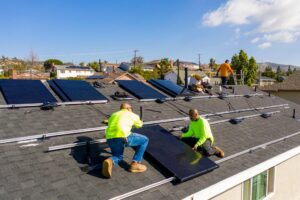
Two installers placing a solar panel on a mounting frame. Proper installation requires electrical knowledge, safety precautions, and coordination, which professional crews handle routinely.
Pros of Installing Solar Panels Yourself (DIY)
Why would anyone consider DIY solar given the challenges? There are a few potential advantages:
- Cost Savings on Labor: By far the biggest motivator for DIY solar is saving money. Professional installation labor and overhead can account for a portion of a solar project’s cost. By doing it yourself, you eliminate labor expenses and installer margins. On average, a home DIY solar panel system might cost around 10% less than a professionally installed system (source). (This percentage can vary – some sources say the savings could be a bit more if you’re avoiding a large installer’s markup, but 10% is a realistic benchmark based on energy industry data.)
- Personal Satisfaction: Tackling a solar installation can be rewarding if you enjoy hands-on projects. You get the satisfaction of building your own renewable energy system. For enthusiasts, it’s a chance to learn how solar technology works in detail and gain new skills.
- Control Over the Project: DIY installers have full control over component selection and system design. You can choose specific panel models, inverters, or mounting solutions that you prefer, rather than what an installer offers. You also schedule the work on your own timeline.
- Ideal for Small Off-Grid Applications: If your goal is a small-scale setup – such as a few panels for an RV, boat, or an off-grid cabin – DIY is often the way to go. These smaller systems (often not tied to the utility grid) are more manageable for DIY and involve lower voltages, making them safer and simpler to install. In fact, experts note that small off-grid projects are best suited for DIY, whereas attempting a full home rooftop system is far more complex (source).
- Avoiding Sales Pressure: Some homeowners are wary of dealing with salespeople or contractors. By going DIY, you skip the sales presentations and potential upselling. You can research and make decisions at your own pace without any pressure.
These advantages make DIY solar appealing to a subset of homeowners – typically those who are very handy, love DIY work, and have a strong technical aptitude. If you have electrical experience or are a determined do-it-yourselfer, the cost savings and pride of building your own system can be attractive. However, one must weigh these benefits against the downsides, which we’ll cover next.
Cons and Risks of DIY Solar Installation
While saving money is tempting, it’s critical to understand the risks and drawbacks of DIY solar before climbing onto the roof. Here are the main cons:
- Safety Hazards: Installing solar panels involves working at heights and handling electrical connections. Climbing on a roof with heavy solar panels and tools carries a risk of falls or injuries. Even more importantly, photovoltaic panels and batteries (if you use them) generate significant electrical current. Mistakes in wiring can cause electric shock or fire hazards. Professional installers follow strict safety protocols – as a DIYer, you assume all these risks yourself. One small error (like improper wiring or not turning off the right breakers) could be life-threatening.
- Electrical and Building Code Compliance: Solar installations must adhere to national electric code (NEC) standards and local building codes. If you’re not already knowledgeable about electrical code requirements (wire gauges, grounding, overcurrent protection, etc.), designing a code-compliant system is challenging. Improper installations could fail inspection or create dangerous conditions. Professionals are trained and certified to meet these codes. DIY installations often face longer approval processes or rejections during inspection if something isn’t up to code.
- Permit and Interconnection Obstacles: As mentioned, getting the necessary permits and utility interconnection approvals can be difficult without experience. Some utilities and municipalities explicitly require a licensed electrician or certified installer’s sign-off on the system. You might not be allowed to connect your DIY solar panels to the grid unless a professional is involved. This means even if you build it, you could be stuck in limbo unable to actually turn it on legally.
- Warranty and Insurance Issues: Most solar panel and inverter manufacturers offer long-term warranties (often 10–25 years). However, these warranties may only apply if the system is installed by a licensed professional. DIY installations often void manufacturer warranties, leaving you on your own if equipment fails prematurely. Additionally, if a DIY install results in roof damage or an electrical fire, your homeowner’s insurance might scrutinize or deny the claim if the work wasn’t done by a qualified professional. The peace of mind from valid warranties and insurance coverage is a big advantage of going with a pro.
- Upfront Costs (Not as Low as You Think): You will pay retail prices for solar equipment as a DIYer. Professional installers often buy panels and components at bulk or distributor pricing. By the time you purchase a DIY kit or individual parts, your hardware costs may actually be higher than what an installer pays. So the net savings from doing it yourself can shrink. As noted earlier, the total savings might only be ~10% of the project cost, which on a typical $20,000 solar system is about $2,000. That savings can quickly evaporate if you need to hire an electrician for a few hours or if any mistake leads to repairs.
- Time and Effort: Think of a DIY solar project as taking on a part-time job for several weeks (at least). Researching and planning the system, ordering equipment, waiting for deliveries, doing the installation, and handling paperwork can consume a lot of time. If you value your time, this is a significant opportunity cost. Professionals can typically install a home solar system in 1–3 days of work. DIY installations could stretch into many weekends of effort, especially if you run into unexpected challenges.
- Quality and Performance Concerns: Let’s face it – unless you’re very experienced, a DIY installation might not be as optimally designed or executed as a professional job. Little details, like slight shading issues, panel placement, or improper inverter settings, could mean your system produces less energy than it could. Over the 25+ year life of a solar array, even a 5% efficiency loss due to an amateur installation can outweigh the small upfront savings. Professionals use advanced tools for site analysis and have the know-how to maximize output. As one solar industry source bluntly put it, DIY solar panels are rarely the best decision for a home, due to financial, legal, and performance considerations (The pros and cons of DIY solar panel installation – Enphase).
- Maintenance and Troubleshooting: When you self-install, you become your own solar service company. Any time the system has an issue, it’s on you to diagnose and fix it. Pro installers usually offer workmanship warranties and will fix problems that arise early on. They can also monitor system performance for you in some cases. With DIY, if your system underperforms or a component fails, you’ll have to climb back up on the roof and sort it out. This can be a headache, especially if issues crop up years down the line.
In short, going DIY on solar is a significant undertaking with substantial risks. For most homeowners, the drawbacks – safety, potential code complications, lack of warranties, and relatively small savings – make DIY less attractive. Next, let’s look at the flip side: what you gain by hiring a professional solar installer.
Advantages of Professional Solar Installation
Most homeowners ultimately choose a professional solar installation for good reasons. Here are the key benefits of letting the pros handle your solar project:
- Expert Design and Installation: Professional solar companies have designers and electricians who do this every day. They will custom-design a system tailored to your home’s specifics (roof angle, shading patterns, energy needs) to ensure optimal performance. Installers also work efficiently and safely when mounting panels and wiring the system. Their experience means your system is far less likely to have issues like roof leaks, loose connections, or improper setup. In 2025, solar technology is advanced, but it still requires expert handling for the best results – a seasoned crew brings that expertise.
- Permitting and Paperwork Handled: A huge convenience of hiring a pro is that they take care of all the permits, inspections, and utility interconnection paperwork for you. Reputable installers know the local building departments and utility processes inside out, so they can get approvals much faster. They will schedule the inspections and work directly with the utility to set up net metering or any necessary meter upgrades. This saves you from bureaucratic headaches and potential delays.
- Access to Incentives: Professional installers ensure you don’t miss out on any solar incentives. In 2025, there are federal tax credits (30% Solar Investment Tax Credit) and possibly state or local rebates available to reduce your cost. While DIY installations can technically qualify for the federal tax credit, the paperwork might be daunting for a homeowner. Installers often fill out or guide you through incentive forms. Moreover, certain rebates or programs might require using a certified installer. With a pro, you can be confident you’ll maximize all financial incentives (note: Eagle Mountain Solar has covered federal incentives in detail elsewhere, so we won’t dive deep here).
- Warranties and Peace of Mind: When you go with a professional, you get robust warranties on both equipment and workmanship. For example, Eagle Mountain Solar’s projects include long-term panel and inverter warranties, and often a labor warranty as well. If anything goes wrong – a faulty panel, an inverter glitch, or a roof leak from installation – it’s covered. You’re not paying out-of-pocket for unexpected problems. Also, as mentioned earlier, manufacturer warranties remain valid with professional installs. Knowing your investment is protected for 25+ years is a huge benefit.
- Better Equipment Pricing: Solar installers buy in bulk and have supplier relationships, which can lower the equipment cost. While a DIY homeowner might pay retail prices for panels and gear, an installer might secure higher-quality panels for the same price (or less). This means you might get better technology for your budget. Plus, installers stay updated on the latest solar tech – they can recommend modern high-efficiency panels or microinverters, etc., that you might not be aware of.
- Support and Monitoring: Many installers offer ongoing monitoring services. They’ll connect your system to a monitoring platform so you can see your energy production in real time, and they can often see it too. If performance drops, a professional can proactively reach out or come fix the issue. You effectively have tech support for your solar array. With DIY, you’re on your own for system performance tracking and troubleshooting.
- Faster and Legally Compliant Installation: What might take a novice several weeks of trial and error, a professional crew can often complete in one or two days of work. This means your solar panels start producing power (and savings) much sooner. Additionally, you can rest easy knowing the system is fully up to code and approved by inspectors. There’s no lingering worry that something wasn’t done right. The project is truly “turnkey.” As one analysis noted, the modest extra cost of professional installation is well worth the time saved and headaches avoided (source).
Cost Considerations: Is DIY Solar Really Cheaper?
It’s time to address the elephant in the room: cost. We’ve mentioned that DIY can save on labor, but how does the math actually shake out in 2025?
It’s a common misconception that doing a solar project yourself will cut the cost in half. In reality, solar panel hardware makes up the bulk of the cost, and those prices are largely the same whether you DIY or not. Installers might charge ~10-20% of the project cost for labor and overhead. So if you eliminate those by doing it yourself, that’s the theoretical savings range (around 10% as cited earlier, up to maybe 20% in some cases). However, consider the following:
- DIY Hidden Costs: If you aren’t a licensed electrician, you might need to hire one at least to do the final hookup to your electrical panel – that’s a cost. You may need to buy or rent specialty tools (like a crimping tool for solar connectors, safety harness for roof work, etc.). Mistakes can be costly too; blowing out an inverter by miswiring or cracking a solar panel by dropping it would instantly wipe out savings.
- Value of Your Time: The hours you spend on installation and paperwork have value. If it takes you 40 hours of labor (for planning and installation) to save $2,000, that’s $50/hour “wage” to yourself, not counting the stress and risk. For many homeowners, it might be more sensible to spend that time at their actual job or with family and let a crew handle the installation.
- Quality Differences: Professionals might get you a better result, as discussed. A perfectly optimized system installed quickly means you start saving sooner and possibly save more over time. A DIY system that isn’t performing at 100% could lose you more money in the long run than it saved upfront.
- Financing Options: When you work with a solar company, they often have financing partners that allow you to install with zero down or low-interest loans. This means you can spread out the cost and often your monthly loan payment is offset by your energy bill savings. As a DIYer, you’ll typically need to pay for all equipment upfront (unless you find your own loan). Some people go DIY because they think it’s the only affordable way – but with modern solar financing, many homeowners can go solar professionally with little or no money down and still come out ahead financially.
In summary, the cost gap between DIY and professional solar isn’t as wide as many assume. Research by the National Renewable Energy Lab even found that savings from DIY are only around 10% of the total cost on average (source). For that small difference, you have to weigh whether it justifies the safety risks and potential complications. In most cases, investing a bit more for professional installation buys you a lot of peace of mind and likely greater savings over the system’s lifetime.
Making the Right Choice for Your Home
Every homeowner’s situation is different. If you are a licensed electrician or have significant construction experience, DIY solar might be within your capabilities. For a vast majority of homeowners, however, the professional installation route is the safest and ultimately most cost-effective choice. Solar energy is a 25+ year investment – how it’s installed will affect your home, your finances, and your safety for decades.
Here are a few parting tips to make your decision:
- Assess Your Skills and Comfort: Be honest about your DIY skills. Handling a home solar install is more akin to building a small power plant than doing a simple home improvement project. If you have any doubts, lean toward hiring experts.
- Get Quotes from Reputable Installers: Even if you’re curious about DIY, it doesn’t hurt to get a professional quote. You might be surprised that the price (after incentives) is quite reasonable. With a quote in hand, you can calculate exactly how much DIY would save you and if it’s worth it.
- Consider a Middle Ground: Some homeowners opt to do parts of the work (like mounting panels) and have an electrician do the final hookups. While not full DIY, this can save some labor cost while ensuring critical electrical aspects are done right. Keep in mind you’d still need permits and such, so this approach requires coordination.
- Prioritize Safety and Longevity: However you proceed, never compromise on safety. Use proper safety gear, follow electrical codes, and ensure the installation is built to last. Solar is only a great investment if it runs smoothly for years. A shoddy DIY job that fails or causes damage ends up being far more expensive.
Conclusion
Installing solar panels is one of the best investments you can make in 2025 for your home – providing clean energy, lowering bills, and increasing property value. The decision to DIY or hire a professional installer will impact how successful that investment is. For most homeowners, partnering with a reputable solar company is the wise choice to ensure a safe, efficient, and hassle-free installation.
However, if DIY is for your, check out this DIY company we recommend.
If you’re a homeowner ready to explore solar (minus the headaches of DIY), let the experts help. Eagle Mountain Solar is here to make your solar journey easy and rewarding. We handle everything from design and permitting to installation and beyond, so you can enjoy the benefits of solar without the stress.
Ready to go solar? Contact Eagle Mountain Solar for a free, no-obligation consultation. Our team will answer your questions, provide a customized quote, and help you take the next step toward a brighter, solar-powered future for your home. Don’t let confusion or DIY worries hold you back – Eagle Mountain Solar has you covered every step of the way!
||| ||| renewable-energy|solar|solar-panels|solar-power|sustainability