As more homeowners turn to solar energy for electricity savings and sustainability, many wonder: Does solar work when the grid is down? With increasing interest in energy independence, particularly during extreme weather events, understanding whether solar panels can power your home during blackouts is crucial. In this post, we’ll dive into how solar systems function during outages, comparing grid-tied and off-grid setups, and exploring how battery storage plays a pivotal role in maintaining power when the grid fails.
(If you are exploring solar for your home, it is best to set up a personalized consultation for your home. Inquire here for a free meeting with one of our consultants.)
How Do Solar Panels Work?
Solar panels convert sunlight into electricity through photovoltaic (PV) cells. The electricity produced is in the form of direct current (DC), which an inverter then converts into alternating current (AC), the type of electricity that powers most household appliances. Learn more how panels work here.
Most homeowners opt for grid-tied solar systems, meaning the solar panels are connected to the local utility grid. During the day, solar energy can power your home directly or send excess electricity back to the grid. But does solar work when the grid goes down? The short answer is: not without a backup plan.
Grid-Tied Solar Systems: What Happens When the Grid is Down?
Grid tied systems allow homeowners to take advantage of net metering, where any excess electricity generated by their solar panels is sent back to the grid in exchange for utility bill credits. However, a significant drawback of grid-tied systems is that they do not function during a power outage.
Why don’t solar panels work when the grid goes down? Grid-tied systems are designed to shut down automatically during a blackout. This is a safety feature required by law to protect utility workers who may be repairing power lines. If your solar system continued to feed electricity into the grid, it could endanger those working to restore power.
So, even if it’s sunny outside, your grid-tied solar panels will not supply electricity to your home unless you have a backup energy solution in place, such as a battery.
Key Tip: Grid-tied solar systems don’t work during blackouts unless paired with a battery backup.
Off-Grid Solar Systems: Powering Through Blackouts
Unlike grid-tied setups, off-grid solar systems are completely independent of the utility grid. These systems are designed for total self-sufficiency, meaning they generate and store all the energy you need to power your home. Off-grid systems are more common in remote areas where utility power is unavailable or unreliable.
Off-grid systems include substantial battery storage to store excess energy produced during the day for use at night or during cloudy weather. Since they operate independently from the grid, these systems will continue to function during blackouts, providing continuous power as long as there is enough stored energy in the batteries.
While off-grid systems can keep your home running when the grid is down, they are much more expensive and complex than grid-tied systems due to the need for extensive battery storage and possibly even a backup generator.
Key Tip: Off-grid solar systems offer complete energy independence and work during power outages, but they require significant investment in batteries.
Hybrid System: Grid Tied + Battery Storage
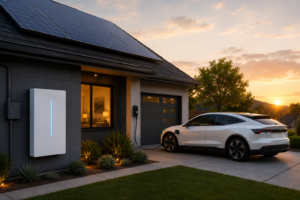
One of the most effective solutions for homeowners with grid-tied systems who want blackout protection is battery storage. Solar batteries, like the popular Tesla Powerwall, allow you to store excess energy produced by your solar panels for use during outages. When the grid is down, your battery automatically kicks in to power essential appliances in your home.
How does it work? During the day, your solar panels generate electricity. Any surplus energy not immediately used by your home is stored in the battery instead of being sent to the grid. When a blackout occurs, the battery provides power, ensuring your home continues to function even when the grid is down. When grid power is restored, the system reverts back to storing in the battery AND the grid.
Can all solar systems work during blackouts if they have battery storage? Yes! By adding battery storage to your grid-tied system, you gain the ability to use solar energy during a power outage. Though you do want a system that is large enough to produce excess during the day as well as sufficient battery storage. One battery may not be enough for larger homes.
Key Tip: Battery storage allows grid-tied solar systems to function during blackouts by providing backup power when the grid is down.
Backup Generators: A Supplement to Solar Systems
If battery storage isn’t in your budget, a backup generator can also help you keep essential appliances running during a blackout. Generators are powered by fuels like propane or natural gas and can provide temporary power until the grid is restored. While not as environmentally friendly as solar power, a generator can be a reliable backup option for extended outages or homes that consume a significant amount of electricity, plus they’re cheaper.
Some homeowners opt for both a solar battery and a generator to ensure they are fully covered in the event of a blackout. The generator can serve as a last resort if the battery storage runs out.
Key Tip: Backup generators can complement a solar system to provide power during blackouts, but they’re less eco-friendly than batteries.
How to Ensure Your Solar System Works During Blackouts
If avoiding power outages is a priority, here are some steps to ensure your solar system can keep your home running when the grid is down:
- Install Battery Storage: Adding a solar battery to your grid-tied system is the most reliable way to ensure you have power during a blackout.
- Consider a Hybrid System: Hybrid solar systems combine the best of both worlds, allowing you to stay connected to the grid while also having battery storage for blackout protection.
- Critical Load Panels: If you install battery storage, consider a critical load panel. This setup prioritizes essential appliances (such as refrigerators, medical devices, and lights) to ensure your battery’s energy is used wisely during an outage.
- System Sizing: Work with your solar installer to ensure your system is designed with enough battery capacity to meet your energy needs during blackouts. This may involve calculating your daily power consumption and ensuring your solar panels produce enough energy to keep the battery charged.
Key Tip: Consider battery storage, hybrid systems, and critical load panels to ensure your solar system works when the grid is down.
Conclusion
So, does solar work when the grid is down? It depends on your system setup. Grid-tied solar systems without a battery will not function during a power outage, but adding battery storage can provide the backup power needed to keep your home running. Off-grid systems, while more expensive, offer complete energy independence and will continue operating during blackouts.
If maintaining power during a blackout is important to you, consider working with a knowledgeable solar installer to design a system that includes battery storage or other backup options. Whether you’re aiming for full energy independence or just want peace of mind during storms and outages, solar power can be customized to meet your needs.
Contact us here for a personalized consultation for your home!
||| |||