What Is Solar Curtailment?
Solar curtailment happens when a solar energy system—whether utility-scale or residential—is forced to reduce its output even though it could generate more electricity. In grid-connected systems, this typically occurs because the grid cannot accept any more solar power at a given time.
While curtailment is most often associated with large-scale utility solar farms, homeowners can also experience a form of curtailment, especially in specific markets or with certain utility programs.
Curious how solar curtailment could affect your system’s performance or ROI? Schedule a free consultation with Eagle Mountain Solar to get expert answers for your home and utility
Why Does Curtailment Happen?
Several reasons:
- Grid congestion: There’s too much energy being generated at once, and the local grid infrastructure can’t handle the flow.
- Export limits: Your utility may cap how much solar power you can export to the grid at any time.
- Battery is full: If you have batteries, once they’re charged and the home isn’t consuming enough power, production may be clipped.
- Inverter clipping: Your inverter may limit how much of your DC solar power can be converted to AC power for use/export.
Curtailment vs. Clipping: What’s the Difference?
People often confuse curtailment with clipping, but they’re different:
- Clipping is when your solar system produces more DC energy than your inverter is rated to handle. It’s a hardware limitation.
- Curtailment is typically caused by grid conditions or utility rules that stop or reduce power export even when your system could deliver more.
Is Solar Curtailment Common for Homeowners?
In deregulated markets like Texas, curtailment is not extremely common for residential systems right now, but that could change:
- Some Time of Use or Free Nights plans may disincentivize production during certain hours.
- Net billing or low-export-value programs can make exporting energy less economically beneficial—creating a financial form of curtailment.
- With more solar going online, some utilities could eventually implement export restrictions, similar to what’s already happening in states like California (NEM 3.0).
How to Protect Against Curtailment
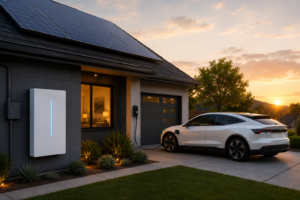
- Use Batteries
Batteries let you store excess production instead of sending it to the grid. This is especially valuable if export compensation is low or capped. - Size Your System Right
Oversizing your system can lead to more clipping or economic curtailment if the export value is poor. Designing for higher self-consumption and factoring in batteries or electric vehicles is a better strategy. - Choose the Right Plan
In Texas, electricity plans vary widely. If your provider has a 1:1 buyback plan, curtailment is less likely. But if you’re on a low buyback or Time-of-Use plan, then your economics may benefit more from self-use and battery storage. - Work With Experts
At Eagle Mountain Solar, we help you analyze your utility plan, inverter sizing, and potential for curtailment, so you get the best long-term performance and savings.
Will Curtailment Get Worse?
Possibly.
As solar adoption grows, utility companies will have to manage more distributed energy. We’re already seeing limited export windows in California and Hawaii, and Texas could follow if infrastructure doesn’t keep pace.
This is why battery storage is the future of residential solar. It allows homeowners to avoid exporting during low-value times, shift usage, and eventually island from the grid when needed.
Final Thoughts
Most homeowners installing solar today won’t need to worry about curtailment—yet. But as grid dynamics evolve and policies shift, it’s important to design your system with flexibility in mind.
Including battery storage, choosing the right buyback plan, and working with an experienced solar consultant can help you maximize every kilowatt your system produces.
Want to know how to size your system correctly or add battery backup to protect against curtailment? Book your free quote and consultation today with Eagle Mountain Solar.